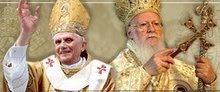
“Blind faith trumping common sense[1],” “Vatican insiders declare the Pope a disaster[2],” “Outrageous,” “Irresponsible” …If anything is embarrassing, it is the sensationalism of such statements in the Western media when giving the party line of anti-Catholic sentiment. The trouble is that when one looks at the science of AIDS research today, one finds a completely different story from the one being promoted by the popular media.
Whose expert opinion?
The problem for the layman is that certain organizations which sound authoritative make claims which are regarded as “expert opinions.” For example, the International Aids Society has denounced Pope Benedict XVI's comments as "contrary to scientific evidence and global consensus" and has suggested that his comments might even exacerbate HIV infection in Africa[3]. In the same vein, the president of the World Health Assembly, Leslie Ramsammy, has claimed, “The statement by the Pope is inconsistent with science, it's inconsistent with our experiences and it is not in sync with what Catholics have experienced and believe[4],” while Kevin Osborne of the International Planned Parenthood Federation says, "All the evidence is that preaching sexual abstinence and fidelity will not solve the problems …The Pope's message will alienate everybody. It is scary. It spreads stigma and creates a fertile breeding ground for the spread of HIV.[5]"
On the other hand, authorities in the field who disagree with these sorts of statements get scant media attention. Here I am not talking about renegade scientists, but professionals in HIV/AIDS research who provide technical reports to the World Health Organisation (WHO) and The Joint United Nations Programme on HIV/AIDS (UNAIDS).
Take, for example, Edward Green, director of Harvard University’s Aids Prevention Research Project (APRP): in an interview with CNA, Green stated with reference to Africa, “Theoretically, condoms ought to work, and theoretically, some condom use ought to be better than no condom use, but that’s theoretically … We just cannot find an association between more condom use and lower HIV reduction rates.[6]”
This view is echoed by Helen Epstein, specialist in public health in developing countries and consultant to Human Rights Watch. In a 2008 letter to UNAIDS she bemoans the disconnect between on-the-ground research about condoms and UN reports: “I seem to recall UNAIDS documents attributing the decline in HIV infections in US gay men to the rise of ‘the condom culture’. In fact, modeling studies by Martina Morris and behavioural surveys carried out across the US show that partner reduction was dramatic during the 1980s, when HIV decline among gays was the steepest. The “condom culture” emerged only later. I can provide many references on this, on request.” She goes on to say, “Condom use alone may have protected many individuals, but has not – in the absence of partner reduction – shown a strong epidemiological effect, anywhere. One may not like this fact, but it is true.”[7]
Condoms, though seemingly an effective technological fix, have had their greatest influence in AIDS prevention when targeted towards such areas as the sex industry in Thailand. But even then, the UNAIDS best practice reports fail to mention that there was a 60% decline in visits to brothels during Thailand’s condom campaign and that this undoubtedly contributed to the decline in HIV.[8]
Why are condoms so ineffective?
The trouble with condoms is that they have the effect of giving users a false sense of security which results in disinhibition, that is, users indulge in greater risk taking which eventually negates any protective effects of the condom. According to Potts et al., “When most transmission occurs within more regular and, typically, concurrent partnerships, consistent condom use is exceedingly difficult to maintain.” [9] James Shelton of the Bureau for Global Health, USAID, in Washington DC puts it this way: “Many people dislike using them (especially in regular relationships), protection is imperfect, use is often irregular, and condoms seem to foster disinhibition, in which people engage in risky sex either with condoms or with the intention of using condoms.”[10] “Condom use with prostitutes and in one-night stands is increasingly the norm all over the world, but they are rarely used in longer-term, less businesslike affairs,” observes Helen Epstein.[11]
Know your epidemic
It is becoming increasingly clear to AIDS researchers that some of the assumptions that underlie HIV prevention strategies are unsupported by the evidence. Some of the confusion is created by a failure to differentiate adequately between different types of epidemics. Outside of Africa (in Europe, the Americas, Middle East, Asia and Australasia) HIV tends to occur among high risk groups: Men who have sex with men, injecting drug users, sex workers and their partners. These are known as concentrated epidemics. Africa, particularly Southern and Eastern Africa, on the other hand, is an example of a generalized epidemic, with infection predominantly heterosexual and generalized among the population. Then there are epidemics such as those in the Caribbean, Pacific region, the horn of Africa and West Africa which may include characteristics of both concentrated and generalized epidemics.[12]
MYTHS ABOUT GENERALISED HIV EPIDEMICS
adapted from Shelton J, Ten myths and one truth about generalized HIV epidemics, (2007) The Lancet, Vol 370, p.1809.9
Myth
Truth
1. Prostitution is the problem.
Of more importance are simultaneous (concurrent) long-term relationships, both formal, as in polygamy, and informal.
2. Men are to blame.
Although men’s behaviour is important, women having multiple partners are a significant contributor.
3. Promiscuous adolescents.
Epidemics span all reproductive ages. HIV incidence increases in women in their twenties and older.
4. Poverty and discrimination are to blame.
The world’s highest HIV prevalence occurs in countries with greater wealth and literacy, such as Botswana (25%) and Swaziland, while countries such as Rwanda, Angola and Congo, known for episodes of conflict, genocide and rape have been much less affected.
5. Condoms are the answer.
There is no consistent relationship between condom use and the decline of a generalized epidemic.
6. Sexual behaviour will not change.
Evidence is mounting that behaviour change is possible and has already happened in some areas.
7. Treatment will stop the spread of AIDS.
Treatment seems to lead to disinhibition rather than stopping new infections.
8. New technology is the answer.
New technology is expensive and engenders a false sense of security.
According to James Shelton there are a number of myths that impede the success of AIDS prevention in Africa These misconceptions include beliefs such as that poverty and conflict increase vulnerability to HIV and that transmission occurs through sex workers and promiscuous men or adolescents; whereas current research seems to indicate that most transmission occurs because of the prevalence of multiple and simultaneous or concurrent partnerships among adults in African society.10 Helen Epstein describes it this way in her article, The Fidelity Fix: “This ‘concurrency’ links sexually active people up in a giant network, not only to one another but also to the partners of their partners’ partners – and to the partners of those partners, and so on – via a web of sexual relationships that can extend across huge regions. If one member contracts HIV, then everyone else in the web may, too.”11 Helen Epstein and Daniel Halperin of Harvard’s Centre for Population and Development Studies explain it this way: “In Africa, many longer term relationships that do not involve prostitution nevertheless tend to have a powerful ‘transactional’ element. People with more disposable income might thus be able to maintain multiple, concurrent relationships. Although very few are ‘rich’ by Western standards, they are nevertheless at the leading edge of the massive social and economic transition occurring in Africa today, from an agrarian past to a semi-industrialised present, characterized by rapid urbanization, high unemployment, and lack of social security. As with all such transitions, this creates upheavals in basic norms, customs and values, which might facilitate the spread of HIV.”[13] In an opinion piece to The Lancet, James Shelton states, “Our priority must be on the key driver of generalized epidemics - concurrent partnerships … But partner limitation (fidelity) has also been neglected because of the culture wars between advocates of condoms and advocates of abstinence, because it smacks of moralising, because mass behavioural change is alien to most medical professionals, and because of the competing priorities of HIV programmes.10
David Wilson of World Bank and Daniel Halperin of the Harvard School of Public Health agree. “For too long, the global HIV-prevention community has pursued generalized responses in concentrated epidemics, concentrated approaches in generalized epidemics, or hedged their bets and done a bit of everything,” they said in the Lancet, August 2008.
“For example, after three decades, the global community is only beginning to accept that there is no simple direct association between income, education, gender inequality, and HIV. Population-based surveys show that the wealthier African countries have the highest, not the lowest, infection levels in Africa, and more educated, upper-income people are generally more likely to be infected with HIV.” They say that it is “striking that a comparison of gender equality and HIV prevalence across African countries shows a strong positive, not negative, association.” That is, wherever women and men are most equal, HIV is most prevalent. Contrast Botswana, the second wealthiest country in Africa, with rare male circumcision, high levels of multiple concurrent partnerships and an HIV prevalence of 25%, with Niger, the lowest ranking country in the Human Development Index, predominantly Muslim with strict sexual constraints and universal male circumcision, but an HIV prevalence of 0.7%. “Turning to generalized epidemics” continue Wilson and Halperin, “we face three overarching challenges. First, our most trusted prevention interventions – testing and counseling, condom promotion, school and youth programmes, and treatment of other sexually transmitted infections … are at best unproven, and at worst disproven, for reducing HIV incidence. Second, the most solidly proven preventive intervention to date, male circumcision, is barely advancing … In countries such as Zambia, with 15% adult HIV prevalence and nearly US$1billion in aid annually for AIDS, much less than 1% of this funding goes for male circumcision services … Third, the major contributor to reduced HIV transmission in generalized epidemics has been reduction in multiple sexual partnerships (increased fidelity). Compelling evidence of this association has emerged in a growing number of African countries, such as Kenya, Zimbabwe and Ethiopia. Additionally, partner reduction seems to have contributed to HIV declines in Haiti and the Dominican Republic. Yet, except for Uganda in the late 1980s, and more recently in Swaziland, reductions in multiple partnerships seem to have mainly occurred despite, not because of, formal programmes.”12
What happened in Uganda
In 1993, Helen Epstein was working as a molecular biologist in Uganda, at that time the country with the highest HIV-infection rate in the world. She explains how HIV incidence plummeted from 21% in 1991to 6% in 2002. “At the time, few international health experts were working on AIDS in Uganda, but the Ugandan government developed a simple and effective program on its own. In 1986, the Uganda Ministry of Health started a vigorous HIV-prevention campaign in which the slogans ‘Love Carefully,’ ‘Love Faithfully” and ‘Zero Grazing’ – Ugandan slang for ‘Don’t have sexual partners outside the home’ – were posted on public buildings, broadcast on radio and bellowed in speeches by government officials, teachers and AIDS-prevention workers across the country. Religious leaders scoured the Bible and the Koran for quotations about infidelity. Newspapers, theatres, singing groups and ordinary people spread the same message. Their words fell on fertile ground … A realistic fear of AIDS was reinforced by a compassionate response to the suffering the disease created. Ordinary Ugandans have always been much more open about AIDS than people from other African countries, and they were also far more likely to admit that they knew someone who had died of the disease or was infected with HIV. Community- and church-based groups sprang up to help families affected by AIDS. Uganda’s women’s movement, one of the oldest and most dynamic in Africa, galvanized around issues of domestic abuse, rape and HIV. The anger of the activists, and the eloquent sorrow of women throughout the country who nursed the sick and helped neighbours cope, was a harsh reproach to promiscuous men. So was their gossip, a highly efficient method of spreading any public-health message.”11
An article by Potts et al. in Science explains it as follows: “In Uganda, HIV prevalence declined dramatically following the extensive “Zero Grazing” campaign of the late 1980s. WHO surveys conducted in 1989 and 1995 found a greater than 50% reduction in the number of people reporting multiple and casual partners. In Kenya, partner reduction and fidelity also appear to have been the main behavioural change associated with the recent HIV decline. Similar behaviour change has been reported in DHS surveys in Zimbabwe, where HIV has also fallen, along with Ethiopia, Cote d’Ivoire, and urban Malawi. In Swaziland, the number of people reporting two or more partners in the past month was halved after an aggressive 2006 campaign focusing on the danger of having a ‘secret lover’.” 9
Reassessing the funding
Potts and his team plead for a reassessment of funding for interventions that have the greatest potential impact. In a letter responding to comments by the Department of Evidence, Monitoring and Policy at UNAIDS, they say, “We note that the requested funding for [hyper-endemic and generalized] epidemics would comprise only a little over 20% of the global total, even though such epidemics account for over two-thirds of all HIV infections worldwide. Also, although 5% of this funding would be dedicated to circumcision programs, the large majority of resources would continue to be allocated to other interventions, for which the evidence of prevention impact in generalized epidemics is much weaker … Recent CDC data from Uganda suggest that most married people who recently acquired HIV were infected by an extramarital partner or by their spouse who had recently acquired HIV from an extramarital partner. Many of the latter were probably in the brief “acute infection” period, when HIV infectivity is much higher yet undetectable by a standard HIV test. It is crucial to address the multiple and concurrent partnerships that mainly drive these generalized epidemics.” [14]
A growing number of AIDS experts who are prepared to look at the facts are questioning why the Ugandan approach has not been emphasized in Southern Africa and elsewhere. Edward Green in his book Rethinking AIDS Prevention says, “There is also a troubling suspicion among a growing number of scientists who support the ABC model that certain opponents may simply be AIDS profiteers, more interested in protecting their incomes than battling the disease.”[15] His book, Aids and Ideology, due for release later this year highlights the AIDS funding industry which is “drawing billions of dollars a year promoting condoms, testing, drugs and treatment of AIDS.”6
Claiming that AIDS has been spread because of the lack of human rights for “vulnerable populations”, such as homosexual men and sex workers, the UN, in the document International Guidelines on HIVAIDS and Human Rights, have suggested that AIDS cannot be defeated unless all international laws restricting human sexuality are amended: “Criminal law prohibiting sexual acts (including adultery, sodomy, fornication and commercial sexual encounters) between consenting adults in private should be reviewed, with the aim of repeal.” The Guidelines also promote abortion on demand, legalization of homosexual marriage, and laws “providing penalties for vilification of people who engage in same-sex relationships.” One could argue that to the UN, AIDS funding is more about promoting the ideologies of the sexual revolution than about using the research to promote public health.[16]
“To treat one AIDS patient with life-prolonging anti-retroviral drugs costs more than $1,000 a year. Our successful ABC campaign cost just 29 cents per person each year," explains Sam Ruteikara, co-chair of Uganda’s AIDS Prevention Committee.[17] David Kalema, Ugandan AIDS activist, puts it poignantly in the film “The Change is On”[18], which documents the Catholic Church’s approach to behaviour modification in South Africa and Uganda:
"Maybe they tried [abstinence] and it failed, and since it failed with them, they think it will fail with everyone. I'm a testimony myself. I finished my primary [school] without having sex. I went for my secondary education, I didn't have sex, I went to University, I was not having sex. I never fell sick because of not having sex. Can this world tell me that it only worked with me? The way it worked with me it can work with everyone else. My friends who used to laugh at me thinking that abstinence is abnormal, most of them are dead by now.”
You can comment on this article here on our Facebook site
References
[1] Cockburn, L. Blind faith trumping common sense. 18 March 2009. Edmonton Sun. http://www.edmontonsun.com/Comment/2009/03/18/8787936-sun.html (accessed 22 March 2009).
[2] Squires, N. Vatican insiders declare the Pope a ‘disaster’. 19 March 2009. Telegraph. http://www.telegraph.co.uk/news/worldnews/europe/vaticancityandholysee/5018013/Vatican-insiders-declare-the-Pope-a-disaster.html (accessed 21 March 2009).
[3] Pope's condom comments could fuel HIV/AIDS, AFP, 21 March 2009, http://www.google.com/hostednews/afp/article/ALeqM5hoINS_JuqDuL85UVqlbipy--E61g , (accessed on 21 March 2009).
[4] World Health Assembly: Pope Benedict ‘Wrong’, AFP, 22 March 2009. http://www.google.com/hostednews/afp/article/ALeqM5hsk4RI5cPLSsvXTY9ZEyWSMrVElg (accessed 22 March 2009)
[5] Clayton, J. and Redhill, R. Pope Benedict XVI's AIDS comments under fire. The Australian, 19 March 2009, http://www.theaustralian.news.com.au/story/0,25197,25206355-32682,00.html (accessed 21 March 2009)
[6] Harvard researcher agrees with Pope on condoms in Africa, Catholic News Agency, 21 March 2009, http://catholicnewsagency.com/new.php?n=15445 (accessed on 21 March 2009).
[7] Epstein, H., email to UNAIDS, 18 January 2008.
[8] Ibid.
[9] Potts, M., Halperin, D. et al. Reassessing HIV Prevention, Science, AAAS, Vol.320, p.750. 9 May 2008. http://www.hvtn.org/media/ReassessingPrevention.pdf
[10] Shelton, J. Ten myths and one truth about generalized HIV epidemics, The Lancet Vol 370, 1 December 2007. http://www.botsblog.org/pdf/10MythsLancet07.pdf
[11] Epstein, H. The Fidelity Fix, New York Times Magazine, 13 June 2004.
[12] Wilson, D. and Halperin, D. “Know your epidemic, know your response”: a useful approach if we get it right. The Lancet, Vol. 372. 9 August 2008. http://www.comminit.com/en/node/276049/347
[13] Epstein, H. and Halperin, D. Letter in response to Wellings et al. Sexual behaviour in context: a global perspective. The Lancet, Vol. 369 17 February 2007.
[14] Halperin, D., Potts, M. et al. Letters: Tailoring AIDS Prevention – Response. Science, Vol. 321, 19 September 2008.
[15] Green, E. Rethinking Aids Prevention: Learning from Successes in Developing Countries. 2003. Praeger.
[16] Sylva, D. Aids and the ideological barrier: the threat to “sexual liberation”. Ethics and Medics. Vol. 33, No. 12. December 2008.
[17] Ruteikara, Sam. Let my people go: AIDS profiteers. Washington Post. 30 June 2008. http://www.washingtonpost.com/wp-dyn/content/article/2008/06/29/AR2008062901477.html (accessed 23 March 2009).
[18] The Change is On. Metanoia Media. Directed by Norman Servais, South Africa, 2008. http://www.metanoia.co.za/ProductInfo.aspx?productid=METTCIO
Showing posts with label liberal media. Show all posts
Showing posts with label liberal media. Show all posts
Monday, March 30, 2009

Saturday, March 28, 2009
The Tyranny of Liberalism
The Tyranny of Liberalism
James Kalb on the Ideology's Totalitarian Impulses
By Annamarie Adkins
NEW YORK, MARCH 27, 2009 (Zenit.org).- Liberals -- on both the Right and Left -- may posit that they favor freedom, reason and the well-being of ordinary people. But some critics believe that liberalism itself erodes the very institutions -- family, religion, local associations -- necessary to restrain its excesses.
One such liberal skeptic is attorney and writer James Kalb, who recently wrote a book entitled, "The Tyranny of Liberalism: Understanding and Overcoming Administered Freedom, Inquisitorial Tolerance, and Equality by Command" (ISI).
Kalb explained to ZENIT why he believes liberalism inevitably evolves into a form of soft totalitarianism, or a “dictatorship of relativism,” and why the Church is well positioned to be its preeminent foe.
Q: What is liberalism?
Kalb: We're so much in the middle of it that it's difficult to see it as a whole. You can look at it, though, as an expression of modern skepticism.
Skeptical doubts have led to a demand for knowledge based on impersonal observation and devoted to practical goals. Applied to the physical world, that demand has given us modern natural science.
Applied to life in society, it has led to a technological understanding of human affairs. If we limit ourselves to impersonal observations, we don't observe the good; we observe preferences and how to satisfy them. The result is a belief that the point of life is satisfying preferences.
On that view, the basic social issue is whose preferences get satisfied.
Liberalism answers that question by saying that all preferences are equal, so they all have an equal claim to satisfaction. Maximum equal satisfaction therefore becomes the rational ordering principle for life in society -- give everyone what he wants, as much and as equally as possible. In other words, give everybody maximum equal freedom.
Q: How can an ideology of freedom become tyrannical?
Kalb: Equal freedom is an open-ended standard that makes unlimited demands when taken seriously.
For example, it views non-liberal standards as oppressive, because they limit equal freedom. Liberal government wants to protect us from oppression, so it tries to eradicate those standards from more and more areas of life.
The attempt puts liberal government at odds with natural human tendencies. If the way someone acts seems odd to me, and I look at him strangely, that helps construct the social world he's forced to live in. He will find that oppressive. Liberal government can't accept that, so it eventually feels compelled to supervise all my attitudes about how people live and how I express them.
The end result is a comprehensive system of control over all human relations run by an expert elite responsible only to itself. That, of course, is tyranny.
Q: You argue that liberalism, especially its "advanced" form, corrupts and suppresses the traditional aspects of life that defined and kept Western society together for centuries such as religion, marriage, family and local community. How does it do that?
Kalb: Equal freedom isn't the highest standard in those areas of life. They have to do with love and loyalty toward something outside ourselves that defines who we are. That love and loyalty involve particular connections to particular people and their ways of life.
Such things cannot be the same for everyone. They create divisions and inequalities. They tell people they can't have things they want.
So equal freedom tells us traditional institutions have to be done away with as material factors in people's lives. They have to be debunked and their effects suppressed.
At bottom, liberalism says people have to be neutered to fit into a managed system of equal freedom. They have to be encouraged to devote themselves to satisfactions that don't interfere with the satisfactions of others.
In the end, the only permissible goals are career, consumption and various private pursuits and indulgences.
That doesn't leave much room for religion or for family or communal values. The only permissible public value is liberalism itself.
Q: How does mass media advance the cause of liberalism?
Kalb: The relationship is almost mechanical. It's one of the great strengths of liberalism.
Television and the Internet give us a world chopped up into interchangeable fragments.
To make that world comprehensible to journalists and viewers it has to be put in order in a simple way that can be understood quickly without regard to particularities.
That's impossible if complex distinctions and local habits are allowed to matter.
For that reason the mass media naturally favor a top-down managerial approach to social life with a bias toward sameness and equality -- in other words, something very much like contemporary liberalism.
To put it differently, the mass media prefer things to be discussed publicly and decided centrally based on a simple principle like equality. If that's done they can understand what's going on and what it all means.
Also, they themselves will serve an important function because they provide the forum for discussion and the information for decision. That situation naturally seems appropriate to them.
Q: What about the distinction between Anglo-American liberalism and continental liberalism, and their different models of secularism? Is it inaccurate to lump everything together under the heading of "liberalism"?
Kalb: The fundamental principle is the same, so the distinction can't be relied on.
In the English-speaking world the social order was traditionally less illiberal than on the continent.
King and state were less absolute, the Church had less independent authority, standing armies were out of favor, the aristocracy was less a separate caste, and the general outlook was more commercial and utilitarian.
Classical liberalism could be moderate and still get what it wanted.
Liberalism is progressive, though, so its demands keep growing. It eventually rejects all traditional ways as illiberal and becomes more and more radical.
For that reason state imposition of liberal norms has become at least as aggressive in Britain and Canada as on the continent.
The United States is still somewhat of an exception, but even among us aggressive forms of liberalism are gaining ground. They captured the academy, the elite bar and the media years ago, and they're steadily gaining ground among the people.
The international dizziness about President Obama and the violent reaction to the narrow victory of Proposition 8 concerning same-sex marriage in California show the direction things are going.
Q: Does rejecting "liberalism" mean rejecting freedom of conscience, political equality, free markets and other supposed benefits of "liberalism"?
Kalb: No. A society can still have those things to the extent they make sense. They just need to be subordinated, at least in principle, to a larger order defined by considerations like the good life.
The Church has noted, for example, that free markets are an excellent thing in many ways. They just aren't the highest thing. The same principle applies to other liberal ideals.
Q: Both Popes Pius IX and Leo XIII condemned liberalism, but it seems the Church has embraced it since the Second Vatican Council in its defense of democracy and human rights. The tone of Church social teaching has also focused more on influencing liberal institutions, and less on shaping individuals, families, and local communities. How does one account for this shift in the Church's attitude?
Kalb: The Church apparently decided modernity was here to stay. Liberal modernity looked better than fascist modernity or Bolshevik modernity.
It claimed to be a modest and tolerant approach to government that let culture and civil society develop in their own way. So the Church decided to accept and work within it.
Also, the development of the mass media and consumer society, and the growth of state education and industrial social organization generally, meant Catholics were more and more drawn into liberal ways of thinking. Hostility to liberalism became difficult to maintain within the Church.
The problem, though, is that liberal modernity is extremely critical and therefore intolerant. In order to cooperate with it you have to do things its way.
The recent, virulent attacks on Pope Benedict for many different reasons by the liberal elite illustrate that phenomenon perfectly.
For that reason, if there's going to be joint social action today, it inevitably focuses on extending liberal institutions rather than promoting local and traditional institutions like the family, which are intrinsically non-liberal. Many people in the Church have come to accept that.
Q: You argue that religion can be the unifying force that offers resistance to advanced liberalism, and that the Catholic Church is the spiritual organization most suited to that task. Why do you think so?
Kalb: To resist advanced liberalism you have to propose a definite social outlook based on goods beyond equal freedom and satisfaction.
A conception of transcendent goods won't stand up without a definite conception of the transcendent, which requires religion. And a religious view won't stand up in public life unless there's a definite way to resolve disputes about what it is.
You need the Pope.
Catholics have the Pope, and they also have other advantages like an emphasis on reason and natural law. As a Catholic, I'd add that they have the advantage of truth.
Tuesday, March 24, 2009
Cardinal: Criticisms of Pope Have Gone Too Far
Archbishop of Genoa Laments Recent Accusations
ROME, MARCH 24, 2009 (Zenit.org).- Attacks directed toward Benedict XVI have gone too far, and Catholics won't go along with it, says the president of Italy's episcopal conference.
Cardinal Angelo Bagnasco, the archbishop of Genoa, said this Monday at the inaugural session of the conference's permanent episcopal council, under way in Rome.
Referring to the recent controversies regarding the lifting of the excommunication of four bishops of the St. Pius X Society, and comments the Pontiff made about condoms on his trip to Africa, the cardinal said "the harshest criticisms to our beloved Pope -- from Italy and above all from abroad -- have gone beyond good sense."
Not wanting to dedicate too much time on the "clumsy accusations," Cardinal Bagnasco directed his comments toward the letter Benedict XVI sent earlier this month to the bishops of the world, in which he explained the reasons for lifting the excommunication of the four Lefebvrite prelates, who had been unlawfully ordained in 1988 by Archbishop Marcel Lefebvre.
The letter "immediately attracted wide consensus," the cardinal noted. He described it as an appeal to the whole Church for genuine reconciliation.
Nevertheless, the cardinal expressed a "severe judgment" regarding the "postures and words that led to a situation which should never have come about, fueling systematic alarmist interpretations and conduct that is mistrustful toward the hierarchy."
Distraction
Regarding Benedict XVI's trip to Cameroon and Angola last week, Cardinal Bagnasco noted that "from the beginning, [it] was diverted from Westerners' attention by a controversy -- on condoms -- which, frankly, was unwarranted."
"It is no accident that Africa's own media showed no interest in the subject, were it not for the damaging insistence of international agencies, and for the statements of some European political leaders and supranational organizations," affirmed the cardinal.
The archbishop of Genoa lamented that the media, governments and international institutions did not "limit themselves to dissent freely, but reached an ostracism that goes beyond secular canons themselves. In any case, derision and vulgarity will never be part of civilized language, and fatally fall on those who practice it."
Furthermore, the cardinal said the Holy Father's comments on the issue have been confirmed by those who work in the fields of health and education in Africa.
Africa needs to focus more on promoting greater access to education and medical care, as well as the "effective promotion of women," Cardinal Bagnasco continued.
He appealed to governments "to keep their commitments," to go beyond "demagogy and the neo-colonial logic of control."
The cardinal also noted that bishops and the faithful will not accept that the Pope is laughed at or insulted, as "the best tradition of our Catholicism is to be with the Pope always and unconditionally."
Friday, February 27, 2009


Tuesday, February 24, 2009
The media vs. the Church [part II]
The Holy See had to make this announcement due to faulty reporting by the media, spreading rumors as if they were fact.
DECLARATION BY THE DIRECTOR OF THE PRESS OFFICE OF THE HOLY SEE, REV. FR. FEDERICO LOMBARDI, SJ
In the late morning the Director of the Press Office of the Holy See, Rev. Fr. Federico Lombardi, SJ, gave the journalists the following declaration:
Not rarely the information media attribute to the "Vatican", intending by that the Holy See, comments and points of view which cannot be attributed to it automatically. The Holy See, in fact, when it intends to express itself authoritatively, uses the proper ways and appropriate means (communiques, notes, declarations).
No other pronouncement has the same merit.
Also recently, inopportune attributions have been made. The Holy See, in its representative branches, shows respect toward civil authorities, which in their legitimate autonomy have the right to provide for the common good.
The media vs. the Church
A good description of media bias...
Shrove Tuesday
by David Warren
2/24/09
The marvelous thing about penitence is you don't have to be particularly guilty to enjoy it. I write "particularly," of course, out of anxiety to cover my theological position: We are all "generally" or "originally" guilty, all born into the heritage of Adam, and unquestionably needful of Christ's redeeming grace. But penitence is not punishment, and the Lent that begins tomorrow is not for anything in particular we have done. (The expression, "That was for nothing; wait till you do something," teases me from my atheist days.)
The Church herself enjoys penitence, some divinely self-imposed, and some imposed externally; and of that externally imposed, some deserved, and some not. An example of this last I watched as it arrived via the BBC one month ago. The headline on their Web site read, "Pope move ignites Holocaust row." It hadn't quite ignited this yet, at the time it appeared, but it soon would, as the BBC (which, like the rest of the Mainstream Media, is viscerally anti-Catholic) was obviously hoping.
I immediately recalled the viciously irresponsible way in which the "Beeb" belatedly reported Pope Benedict XVI's address at the University of Regensburg in 2006. While other media outlets slept, the BBC became the first international news disseminator to realize that there was a single passage in the speech -- a 600-year-old quotation -- which, if misrepresented in a sufficiently sleazy way in their headlines and leads, and followed by hints that Muslims should riot, would soon have the desired effect. Given the "inverted pyramid" form of journalistic presentation, they could cover themselves later in the story, by factually qualifying the impression left by the lead -- that the pope had intentionally made an incendiary, anti-Islamic remark. The damage would already be done, and they needn't fear their qualification would limit it.
Ditto with their more recent, profoundly sleazy reporting, which likewise spread at electronic speed through the rest of the MSM. A very careful perusal of the whole story, in its original and most sophisticated version, would leave the reader in little doubt of the pope's innocence. But people do not read the media; they "watch" or scan it. And anyone merely watching or scanning could be forgiven for thinking the pope had intentionally lifted an excommunication from a "British" "bishop," in the full knowledge that he was a Holocaust denier. In other words, the Panzer Pope was being openly anti-Semitic.
The various liberal (and, in particular, liberal Jewish) "human rights" organizations were quick to run with this slander, and within 24 hours I had poorly informed Jewish friends forwarding to me a petition from the Simon Wiesenthal Centre that made the BBC's original report look honest by comparison. The beauty of the slander, from the point of view of its perpetrators, was that explaining what had actually happened would take quite a few sentences more than the sound bite for which the contemporary media audience has patience.
Needless to say -- or rather, it should be needless to say -- that the lifting of the excommunications on four bishops the late Archbishop Marcel Lefebvre appointed after he had broken with Rome had nothing whatever to do with the political and historical views of any of them. While it could perhaps be fairly argued that Vatican bureaucrats should have vetted the men for "other misdemeanors" before exposing the pope to this "media row," it was clear enough from the beginning that Benedict himself had no idea about Richard Williamson's abhorrent "take" on the Nazi death camps -- in which were murdered, among millions of others, René Lefebvre, the very father of the founder of the Priestly Society of St. Pius X.
Read the rest here.
Wednesday, February 11, 2009
Williamson hits a homerun in the Der Spiegel interview...
Bishop Richard Williamson's denial of the Holocaust has done serious damage to the Catholic Church. In an e-mail and fax exchange with SPIEGEL, the ultra-conservative bishop says that he is willing to "review the historical evidence."
SPIEGEL: The Vatican is demanding that you retract your denial of the Holocaust, and it is threatening to not allow you to resume your activities as a bishop. How will you react?
Williamson: Throughout my life, I have always sought the truth. That is why I converted to Catholicism and became a priest. And now I can only say something, the truth of which I am convinced. Because I realize that there are many honest and intelligent people who think differently, I must now review the historical evidence once again. I said the same thing in my interview with Swedish television: Historical evidence is at issue, not emotions. And if I find this evidence, I will correct myself. But that will take time.
SPIEGEL: How can an educated Catholic deny the Holocaust?
Williamson: I addressed the subject in the 1980s. I had read various writings at the time. I cited the Leuchter report (eds. note: a debunked theory produced in the 1980s claiming erroneously that the Nazi gas chambers were technically impractical) in the interview, and it seemed plausible to me. Now I am told that it has been scientifically refuted. I plan now to look into it.
SPIEGEL: You could travel to Auschwitz yourself.
Williamson: No, I will not travel to Auschwitz. I've ordered the book by Jean-Claude Pressac. It's called "Auschwitz: Technique and Operation of the Gas Chambers." A printout is now being sent to me, and I will read it and study it.
SPIEGEL: The Society of Saint Pius X has set an ultimatum for the end of February. Are you not risking a break with the group?
Williamson: In the Old Testament, the Prophet Jonah tells the sailors when their ship is in distress: " Take me up, and cast me forth into the sea; so shall the sea be calm unto you: for I know that for my sake this great tempest is upon you." The Society has a religious mission that is suffering because of me. I will now examine the historic evidence. If I do not find it convincing, I will do everything in my power to avoid inflicting any further harm on the Church and the Society.
SPIEGEL: What does the repeal of the excommunication by Pope Benedict XVI mean to you?
Williamson: We just want to be Catholic, nothing else. We have not developed our own teachings, but are merely preserving the things that the Church has always taught and practiced. And in the sixties and seventies, when everything was changed in the name of this Council (eds. note: the Second Vatican Council), it was suddenly a scandal. As a result, we were forced to the margins of the church, and now that empty churches and an aging clergy make it clear that these changes were a failure, we are returning to the center. That's the way it is for us conservatives: we are proved right, as long as we wait long enough.
SPIEGEL: People at the Vatican claimed that they didn't know you. Is that true?
Williamson: Most contacts pass through Bishop Fellay and the General Council, of which I am not a member. But three of us four bishops attended a private dinner with Cardinal Castrillon Hoyos in 2000. It was more about getting to know each other, but we certainly talked about theological issues and even a bit of philosophy. The cardinal was very friendly.
SPIEGEL: The Second Vatican Council counts as one of the great achievements of the Catholic Church. Why do you not fully recognize it?
Williamson: It is absolutely unclear what we are supposed to recognize. An important document is called "Gaudium et spes," or Joy and Hope. In it, the writers rhapsodize about the ability of mass tourism to bring people together. But one can hardly expect a conservative society to embrace package tours. It discusses fears and hardships. And then a nuclear war between the superpowers is mentioned. You see, much of this is already outdated. These Council documents are always ambiguous. Because no one knew what exactly this was supposed to mean, everyone started doing as he wished shortly after the Council. This has resulted in this theological chaos we have today. What are we supposed to recognize, the ambiguity or the chaos?
SPIEGEL: Are you actually aware that you are dividing the Church with your extreme views?
Williamson: Only violation of the dogmas, that is, the infallible principles, destroys faith. The Second Vatican Council declared that it would proclaim no new dogmas. Today the liberal bishops act as though it were some sort of all-encompassing super-dogma, and they use it as justification for a dictatorship of relativism. This contradicts the texts of the Council.
SPIEGEL: Your position on Judaism is consistently anti-Semitic.
Williamson: St. Paul put it this way: The Jews are beloved for the sake of Our Father, but our enemies for the sake of the gospel.
SPIEGEL: Do you seriously intend to use Catholic tradition and the Bible to justify your anti-Semitism?
Williamson: Anti-Semitism means many things today, for instance, when one criticizes the Israeli actions in the Gaza Strip. The Church has always understood the definition of anti-Semitism to be the rejection of Jews because of their Jewish roots. This is condemned by the Church. Incidentally, this is self-evident in a religion whose founders and all important individuals in its early history were Jews. But it was also clear, because of the large number of Jewish Christians in early Christianity, that all men need Christ for their salvation -- all men, including the Jews.
SPIEGEL: The pope will travel to Israel soon, where he plans to visit the Holocaust Memorial. Are you also opposed to this?
Williamson: Making a pilgrimage to the Holy Land is a great joy for Christians. I wish the Holy Father all the best on his journey. What troubles me about Yad Vashem is that Pope Pius XII is attacked there, even though no one saved more Jews during the Nazi period than he did. For instance, he had baptismal certificates issued for persecuted Jews to protect them against arrest. These facts have been distorted to mean exactly the opposite. Otherwise, I hope that the pope will also have an eye and a heart for the women and children who were injured in the Gaza Strip, and that he will speak out in support of the Christian population in Bethlehem, which is now walled in.
SPIEGEL: Your statements have caused great injury and outrage in the Jewish world. Why don't you apologize?
Williamson: If I realize that I have made an error, I will apologize. I ask every human being to believe me when I say that I did not deliberately say anything untrue. I was convinced that my comments were accurate, based on my research in the 1980s. Now I must review everything again and look at the evidence.
SPIEGEL: Do you at least recognize universal human rights?
Williamson: When human rights were declared in France, hundreds of thousands were killed throughout France. Where human rights are considered an objective order for the state to implement, there are constantly anti-Christian policies. When it comes to preserving the individual's freedom of conscience against the democratic state, then human rights perform an important function. The individual needs these rights against a country that behaves like a Leviathan. But the Christian concept of the state is a different one, so that the Christian theories of human rights emphasize that freedom is not an end in itself. The point is not freedom from something, but freedom for something. For good.
SPIEGEL: Your statements and the lifting of your excommunication have triggered protests worldwide. Can you understand this?
Williamson: A single interview on Swedish television has dominated the news for weeks in Germany. Yes, it does surprise me. Is this the case with all violations of the law in Germany? Hardly. No, I am only the tool here, so that action can be taken against the SSPX and the pope. Apparently Germany's leftist Catholicism has not yet forgiven Ratzinger for becoming pope.
SPIEGEL: The Vatican is demanding that you retract your denial of the Holocaust, and it is threatening to not allow you to resume your activities as a bishop. How will you react?
Williamson: Throughout my life, I have always sought the truth. That is why I converted to Catholicism and became a priest. And now I can only say something, the truth of which I am convinced. Because I realize that there are many honest and intelligent people who think differently, I must now review the historical evidence once again. I said the same thing in my interview with Swedish television: Historical evidence is at issue, not emotions. And if I find this evidence, I will correct myself. But that will take time.
SPIEGEL: How can an educated Catholic deny the Holocaust?
Williamson: I addressed the subject in the 1980s. I had read various writings at the time. I cited the Leuchter report (eds. note: a debunked theory produced in the 1980s claiming erroneously that the Nazi gas chambers were technically impractical) in the interview, and it seemed plausible to me. Now I am told that it has been scientifically refuted. I plan now to look into it.
SPIEGEL: You could travel to Auschwitz yourself.
Williamson: No, I will not travel to Auschwitz. I've ordered the book by Jean-Claude Pressac. It's called "Auschwitz: Technique and Operation of the Gas Chambers." A printout is now being sent to me, and I will read it and study it.
SPIEGEL: The Society of Saint Pius X has set an ultimatum for the end of February. Are you not risking a break with the group?
Williamson: In the Old Testament, the Prophet Jonah tells the sailors when their ship is in distress: " Take me up, and cast me forth into the sea; so shall the sea be calm unto you: for I know that for my sake this great tempest is upon you." The Society has a religious mission that is suffering because of me. I will now examine the historic evidence. If I do not find it convincing, I will do everything in my power to avoid inflicting any further harm on the Church and the Society.
SPIEGEL: What does the repeal of the excommunication by Pope Benedict XVI mean to you?
Williamson: We just want to be Catholic, nothing else. We have not developed our own teachings, but are merely preserving the things that the Church has always taught and practiced. And in the sixties and seventies, when everything was changed in the name of this Council (eds. note: the Second Vatican Council), it was suddenly a scandal. As a result, we were forced to the margins of the church, and now that empty churches and an aging clergy make it clear that these changes were a failure, we are returning to the center. That's the way it is for us conservatives: we are proved right, as long as we wait long enough.
SPIEGEL: People at the Vatican claimed that they didn't know you. Is that true?
Williamson: Most contacts pass through Bishop Fellay and the General Council, of which I am not a member. But three of us four bishops attended a private dinner with Cardinal Castrillon Hoyos in 2000. It was more about getting to know each other, but we certainly talked about theological issues and even a bit of philosophy. The cardinal was very friendly.
SPIEGEL: The Second Vatican Council counts as one of the great achievements of the Catholic Church. Why do you not fully recognize it?
Williamson: It is absolutely unclear what we are supposed to recognize. An important document is called "Gaudium et spes," or Joy and Hope. In it, the writers rhapsodize about the ability of mass tourism to bring people together. But one can hardly expect a conservative society to embrace package tours. It discusses fears and hardships. And then a nuclear war between the superpowers is mentioned. You see, much of this is already outdated. These Council documents are always ambiguous. Because no one knew what exactly this was supposed to mean, everyone started doing as he wished shortly after the Council. This has resulted in this theological chaos we have today. What are we supposed to recognize, the ambiguity or the chaos?
SPIEGEL: Are you actually aware that you are dividing the Church with your extreme views?
Williamson: Only violation of the dogmas, that is, the infallible principles, destroys faith. The Second Vatican Council declared that it would proclaim no new dogmas. Today the liberal bishops act as though it were some sort of all-encompassing super-dogma, and they use it as justification for a dictatorship of relativism. This contradicts the texts of the Council.
SPIEGEL: Your position on Judaism is consistently anti-Semitic.
Williamson: St. Paul put it this way: The Jews are beloved for the sake of Our Father, but our enemies for the sake of the gospel.
SPIEGEL: Do you seriously intend to use Catholic tradition and the Bible to justify your anti-Semitism?
Williamson: Anti-Semitism means many things today, for instance, when one criticizes the Israeli actions in the Gaza Strip. The Church has always understood the definition of anti-Semitism to be the rejection of Jews because of their Jewish roots. This is condemned by the Church. Incidentally, this is self-evident in a religion whose founders and all important individuals in its early history were Jews. But it was also clear, because of the large number of Jewish Christians in early Christianity, that all men need Christ for their salvation -- all men, including the Jews.
SPIEGEL: The pope will travel to Israel soon, where he plans to visit the Holocaust Memorial. Are you also opposed to this?
Williamson: Making a pilgrimage to the Holy Land is a great joy for Christians. I wish the Holy Father all the best on his journey. What troubles me about Yad Vashem is that Pope Pius XII is attacked there, even though no one saved more Jews during the Nazi period than he did. For instance, he had baptismal certificates issued for persecuted Jews to protect them against arrest. These facts have been distorted to mean exactly the opposite. Otherwise, I hope that the pope will also have an eye and a heart for the women and children who were injured in the Gaza Strip, and that he will speak out in support of the Christian population in Bethlehem, which is now walled in.
SPIEGEL: Your statements have caused great injury and outrage in the Jewish world. Why don't you apologize?
Williamson: If I realize that I have made an error, I will apologize. I ask every human being to believe me when I say that I did not deliberately say anything untrue. I was convinced that my comments were accurate, based on my research in the 1980s. Now I must review everything again and look at the evidence.
SPIEGEL: Do you at least recognize universal human rights?
Williamson: When human rights were declared in France, hundreds of thousands were killed throughout France. Where human rights are considered an objective order for the state to implement, there are constantly anti-Christian policies. When it comes to preserving the individual's freedom of conscience against the democratic state, then human rights perform an important function. The individual needs these rights against a country that behaves like a Leviathan. But the Christian concept of the state is a different one, so that the Christian theories of human rights emphasize that freedom is not an end in itself. The point is not freedom from something, but freedom for something. For good.
SPIEGEL: Your statements and the lifting of your excommunication have triggered protests worldwide. Can you understand this?
Williamson: A single interview on Swedish television has dominated the news for weeks in Germany. Yes, it does surprise me. Is this the case with all violations of the law in Germany? Hardly. No, I am only the tool here, so that action can be taken against the SSPX and the pope. Apparently Germany's leftist Catholicism has not yet forgiven Ratzinger for becoming pope.
Wednesday, February 4, 2009
The SSPX fiasco continues to boil....
... unreasonably, of course.
The crazy reaction of some secular leaders, as well as the blatant, unfaithful and pusillanimous statements of bishops within the Church has made this one big tempest in a teapot.
So much for moving toward mercy and forgiveness, the chief tenants of the Catholic faith. So much for understanding and contextualizing truth. So much for level headed dialogue within and without the Church.
Well, finally there is a very clear article about what is going on here, and who really is to blame for this 'scandal'. A NY rabbi speaks on behalf of the pope, and quite well, in fact.
The crazy reaction of some secular leaders, as well as the blatant, unfaithful and pusillanimous statements of bishops within the Church has made this one big tempest in a teapot.
So much for moving toward mercy and forgiveness, the chief tenants of the Catholic faith. So much for understanding and contextualizing truth. So much for level headed dialogue within and without the Church.
Well, finally there is a very clear article about what is going on here, and who really is to blame for this 'scandal'. A NY rabbi speaks on behalf of the pope, and quite well, in fact.
Jewish Reaction to Pope Disproportionate
[Father Z. comments]
The official Jewish response to Pope Benedict XVI recent decision to reach out to the St. Pious [sic] X Society and to revoke the excommunication (though not yet determining the status) of four bishops says a great deal about the psycho-social state of American Jewish leadership or at least the leadership that claims to speak for American Jews. [nicely phrased]
The admittedly unnerving if not hurtful Holocaust denying views of one of those bishops, British born Richard Williamson, an obscure, irrelevant, cranky old man, offered on Swedish television, evoked the wrath of no less than the Anti-Defamation League, the American Jewish Committee, the B’nai B’rith International, the International Jewish Commission on Interreligious Consultations and the U.S. Holocaust Memorial Museum. "The decision undermines the strong relationship between Catholics and Jews", they protested. "We are stunned that the Vatican has ignored our concerns", they proclaimed.
This will have "serious implications for Catholic-Jewish relations" and there will be a "political cost for the Vatican" they threatened. And from Israel, the Chief Rabbinate in Israel, one of the most corrupt religious establishments in Western democracies, [wow] entered the fray calling into doubt the Pope’s impending visit to Israel. All this hubbub and anxious lashing out about an internal Church matter regarding the sort of crabby, crotchety, trivial, unknown sort of jerk – the ratty uncle who embarrasses you every time he is in public—who we all recognize exists in our communities. [Okay… so that’s a "no" vote for Williamson, I think.]
As an eighth generation rabbi and someone who lost much family in the Holocaust, it could just be me, but this official Jewish response seems outrageously over the top. [!] Do millions of American Jews sufficiently care that the Pope revoked the excommunication of this unheard of bishop such that major Jewish organizations should devote so much energy and attention to this and turn it into a cause célèbre worthy of front page attention? And is this the way we speak to each other after decades of successful interfaith work on improving our relationship? [Unless those who are going over the top really don’t want good relations….?]
How is it that the view of some cranky bishop who has no power evokes calls of a crisis in Catholic – Jewish relations despite the revolutionary changes in Church teachings regarding Jews since Vatican II? Where is the "proportionality", [Isn’t that tern usually used in responses to acts of terror, etc?] where is the giving the benefit of the doubt – a central religious and spiritual imperative – in response to something that is admittedly upsetting but in the scheme of things is less than trivial especially given this Pope’s historic visit to Auschwitz in which he unambiguously recognized the evil perpetrated upon Jews in the Holocaust and in his way "repented" for any contribution distorted Church teachings made to create the ground for such evil to erupt.
Something is off-kilter here. Is it possible that the leadership of Jewish defense agencies, people with the best of motivation who have historically done critical work in fighting anti-Semitism, have become so possessed by their roles as monitors of anti-Semitism, so haunted by unresolved fears, guilt, and even shame regarding the Holocaust, and perhaps so unconsciously driven by how these issues literally keep their institutions afloat, that they have become incapable of distinguishing between a bishop’s ridiculous, loopy, discredited views about the Holocaust and a Church from the Pope down which has clearly and repeatedly recognized the evil done to Jews in the Holocaust and called for that evil to never be forgotten. [!]
Perhaps, this called for a little understanding of what it must be like to actually run a 1.2 billion person spiritual community (one with which I disagree on many issues) and to be trying to create some sense of unity from right to left, from extreme liberalism to extreme traditionalism – sort of like the liberal Barack Obama inviting Rick Warren, despite his hurtful [?] views on homosexuality, to give the invocation at the inauguration. How about cutting a Pope, who we know along with the previous Pope is probably amongst the most historically sensitive Popes to the issues of anti-Semitism, Holocaust, and the relationship to Judaism and Jews, a little slack given how he is trying to heal his own community. And is it possible that the Pope’s desire/hope/need to reintegrate the Church (he has also reached out to Liberal theologian Hans Kung) may be of more importance both to the Church and actually to religion on this planet [!] than whether we Jews are upset about the lifting of excommunication of one irrelevant bishop. [well said]
Would we Jews like to be judged by the crankiest, most outlandish, hurtful, and stupid thing any rabbi in the world said about Catholics or Christians? We Jews are no longer organized to excommunicate and a rabbi can’t be defrocked the way the Church does with its clergy but surely there are individual rabbi’s who say things so abhorrent about the "other" that though we still call the person rabbi we would not want to be taken to task for doing so.
And isn’t it possible that bringing Richard Williamson back inside the Church may actually influence him to see how wrong he is on this issue given how clear the Church is regarding the Holocaust and its commitment to Catholic Jewish relations? After all the Pope himself said, "I hope my gesture is followed by the hoped for commitment on their part to take the further steps necessary to realize full communion with the Church, thus witnessing true fidelity, and true recognition of the magisterium and the authority of the pope and of the Second Vatican Council." There is no way to read this other than to conclude that to be fully reinstated in the Catholic Church, all those who have passed the first test must now clear the big hurdle: either accept what the Catholic Church teaches or remain on the sidelines. And what the Church teaches, among other things, is the necessity of respecting Jews.
Moreover, shouldn’t the Jewish defense agency leadership, which to its credit is probably the most effective at its work of any ethnic and religious group in this country, try to understand the inner categories of the other, [good] especially after decades of inter-faith and inter-group work? In this case, that there is a difference between heresy – an accusation from which the Pope is trying to heal part of his community- and stupidity. And what is the cost of not seeing the difference between heresy and stupidity? [Very well put!]
Finally, when the Pope as well as key Vatican officials said within a day that Williamson’s views are "absolutely indefensible" and that in the Pope’s own words, the Church feels "full and indispensable solidarity with Jews against any Holocaust denial" where was a little humility in response? Wouldn’t it have been interesting, yet alone ethically compelling, for those who initially lashed out to have acknowledged that perhaps they did overreact and that they do know that the Church and specifically this Pope are very sensitive to these issues. But that we ask the Pope and church hierarchy to please understand that, whether fully justified or not, we are still very very raw and very vulnerable regarding the Holocaust and so we are sorry if we did over react and we are deeply grateful for the Pope’s unambiguous reiteration of that which we do know is his view and is contemporary Catholic teachings.
Tuesday, September 16, 2008
The "Gibson Doctrine"...
The way that Charlie Gibson drilled Sarah Palin was shameless, and Dennis Praeger points out nicely the utter ridiculousness' apex:
read Praeger's whole piece here.
GIBSON: Do you agree with the Bush doctrine?
PALIN: In what respect, Charlie?
GIBSON: The Bush -- well, what do you -- what do you interpret it to be?
PALIN: His worldview?
GIBSON: No, the Bush doctrine, enunciated September 2002, before the Iraq war.
When he asked Palin whether she agreed with the Bush Doctrine without defining it, he gave the game away. He lost any pretense of fairness. Asking the same unanswerable question three times had one purpose -- to humiliate the woman. That was not merely partisan. It was mean.
I couldn't answer it -- and I have been steeped in international affairs since I was a Fellow at the Columbia University School of International Affairs in the 1970s. I have since been to 82 countries, and have lectured in Russian in Russia and in Hebrew in Israel. Most Americans would consider a candidate for national office who had such a resume qualified as regards international relations. Yet I had no clue how to answer Gibson's question.
I had no clue because there is no right answer. There are at least four doctrines that are called "Bush Doctrine," which means that there is no "Bush Doctrine." It is a term bereft of meaning, as became abundantly clear when Gibson finally explained what he was referring to:
GIBSON: The Bush doctrine, as I understand it, is that we have the right of anticipatory self-defense, that we have the right to a preemptive strike against any other country that we think is going to attack us. Do you agree with that -- the right to preemptive attack of a country that was planning an attack on America?
That's the Bush Doctrine? "The right to preemptive attack of a country that was planning an attack on America?"
Isn't that just common sense? What country in history has thought it did not have the right to attack those planning to attack it? I learned the "Bush Doctrine" when I was a student at yeshiva in the fourth grade, when I was taught a famous Talmudic dictum from about 1,800 years ago: "If someone is coming to kill you, rise early and kill him."
And preemptive attack is exactly what happened in June 1967, when Israel attacked Egypt and Syria because those countries were planning to attack Israel. Would any American president before George W. Bush have acted differently than Israel did? Of course not. Did they all believe in the Bush Doctrine?
That is how Gibson added foolishness to his meanness.
All the interview did was reconfirm that Republicans running for office run against both their Democratic opponent and the mainstream news media.
This year it is more obvious than ever. The press's beatification of Obama is so obvious, so constant (how many covers of Newsweek and Time has Obama been on?) that media credibility even among many non-conservatives has been hurt.
Let me put this another way. Charlie Gibson showed far greater hostility toward the Republican vice-presidential candidate than Dan Rather did in his interview with Saddam Hussein or Mike Wallace did in his interview with Iran's Mahmoud Ahmadinejad.
Which reminds me of another Talmudic dictum: "Those who are merciful to the cruel will be cruel to the merciful."
We might call it the media's Gibson Doctrine: Confront Republicans, act obsequious toward tyrants.
read Praeger's whole piece here.